

Training on chemical pesticides hazardous and its mitigation measures
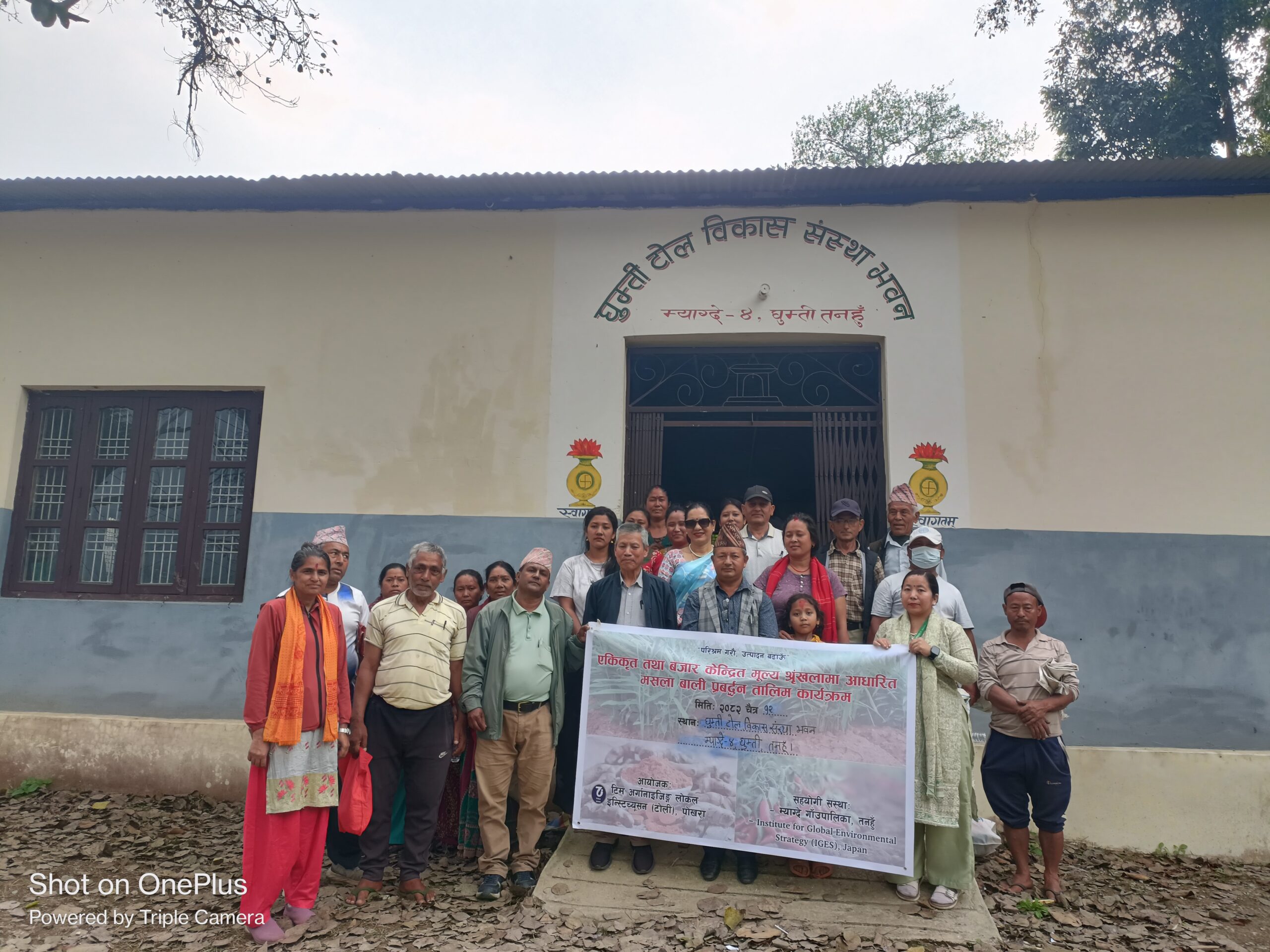
Chemical pesticides hazardous and its mitigation trainings were organized in two places namely in Myagde RM ward no. 4 Ghumti on 2026-06-10 and ward no. 6 Akala on 2026-06-11. In Akala, representative of 3 farmers groups were presented whereas in Ghumti, represented from 5 farmer’s group.
The objectives of the training were to:
- To impart knowledge on alternative uses of chemical fertilizers and pesticides
- To aware about consequences of haphazard use of chemical fertilizers and pesticides
- To inform about mitigation measures of chemical fertilizers and pesticides
- To impart knowledge on advantages of organic farming
The facilitators highlighted the importance of improving farmyard manure (FYM) to enhance crop productivity and explained five key principles: protecting FYM from direct sunlight and rain, preventing flood damage, collecting and utilizing livestock urine, avoiding drying before application, and avoiding prolonged storage in the field. Participants were also given a practical demonstration on preparing and safely applying Bordeaux mixture for disease management in spice crops, including precautions regarding preparation, application timing, weather conditions, crop suitability, and reapplication intervals.
The session also covered environmental pollution, its major causes, and impacts on human health and ecosystems. Participants were encouraged to adopt organic and biodiversity-friendly practices such as improved FYM, livestock urine management, green manure, legume integration, compost and vermin-compost, botanical pesticides, *Trichoderma* seed treatment, Bordeaux mixture, beneficial insect conservation, and plantation along roads, rivers, and barren lands. The benefits of organic production, including improved soil fertility, biodiversity conservation, reduced chemical use and pollution, better health, enhanced product quality and market value, and improved livelihood opportunities, were also emphasized.
Following farmers groups participated in the two slots of chemical hazardous training as below:
| S.N. | Group name | Address | Male | Female | Total | slot |
| 1 | Chhimliswara | Ward no. 4 | 1 | 2 | 3 | 1st |
| 2 | Akala A & B | Ward no. 6 | 6 | 8 | 14 | 1st |
| Sub-total | 7 | 10 | 17 | |||
| 3 | Beltar | Ward no. 3 | 0 | 2 | 2 | 2nd |
| 4 | Ghumti | Ward no. 4 | 2 | 6 | 8 | 2nd |
| 5 | Kurlechaur | Ward no. 4 | 0 | 3 | 3 | 2nd |
| 6 | Kerabari Kharkhare | Ward no. 6 | 0 | 3 | 3 | 2nd |
| 7 | Sarbalang | Ward no. 6 | 2 | 1 | 3 | 2nd |
| Sub-total | 4 | 15 | 19 | |||
| Total | 11 | 25 | 36 | 1st& 2nd |